The title pretty much says it all. Competition with the EC12 is
moving to a higher level as we compete with the boat we love,
internationally. Were will it grow to? Hopefully, the day will
come that we have a 43 boat field, much like that at Disney.
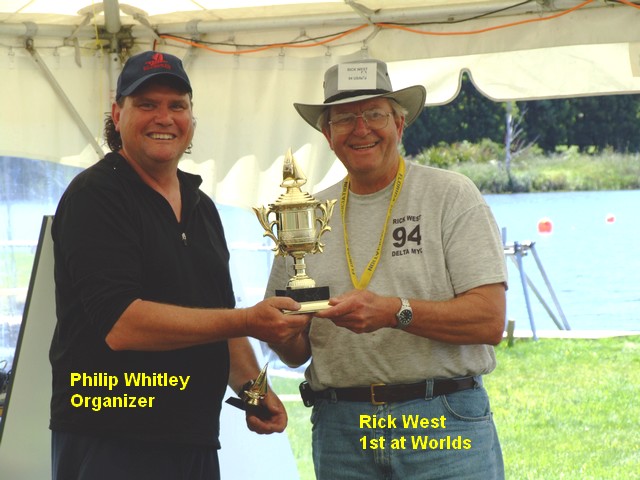
Congratulations to Rick West, winner of the
2006 Morgan – Black EC12 Champions Trophy. Rick's
name will be the first name on the trophy. What appropriate
recognition to a job well done, both on the course and also for
the class. Thanks, Rick.
First Report, Rec'd
16 Nov.
The Worlds – Morgan Black EC12
International Trophy
Motueka, New Zealand – November
16-19, 2006
This event is the collimation of
efforts over four years and hosted by the Radio Yacht Squadron
Nelson. The regatta is sailed in combination of the New Zealand
EC12 Owners Associations National Championship with scoring
specific to NZL and the Worlds. New Zealand (24), Australia (3),
the United Kingdom (1) and the United States (3) were
represented.
The freshwater venue is located
in a small community south of Motueka (Moe-two-aa-ka) on route
60, which runs northward from Nelson along the Tasman Bay shore
toward the Abel Tasman National Parks and Preserves. The lake is
in full view of the surrounding mountains with only the Bay open
to a horizon.
The lake was entrusted to the
Yacht Squadron with the condition they clean up the shores to
make the location appealing and usable to the public. (This is
not a legalistic society) In a project that began a year in
advance of the event has been done with grading and seeding for
grass. There are other permanent building plans but the photos
will show a very beautiful and pleasant location. (Photos will
be posted the first of December.)
The Worlds venue is blessed with
sea breezes and the changing of weather found here in their New
Zealand’s Spring. Those at the lake on the 15th found
light horizontal spitting rain and wind from 20 to 40 knots. The
very large tent needed shoring up for shelter. A metal shipping
container provided storage for the boats and gear and all the
equipment needed by the Race Committee.
Wednesday, the 16th
was clear of clouds with breezes 3-12 clocking from the
northwest to northeast and pleasant temperatures in the low 70’s
(low 20’s-C). The International group spent much of the day
rebuilding their rigs from the packing crates and the late after
noon moved into tuning during practice racing much like we do in
the US. A and B rigs worked very well as each nation sized up
the other.
The Kiwis are wonderful hosts
and a pleasant attitude found all around the country. The
afternoon in the sun and being on the water was welcome with as
much conversation as sailing. There was an evening gathering of
all at the lake with fireworks, the raising of flags with
national anthems and a welcome presentation by Commodore Philip
Whitley. International competitors were presented with rain
windbreakers, finely tailored polo type shirts and a cap. All
were in dark blue embroidered for the event in red topped by the
New Zealand fern logo. It was a fine affair and very nicely done
setting the standard for an event that will be called every
three years.
All the days are filled with
activities, food, lots of beer and some sailing.
Thursday, November 16 dawned
clear with light breezes. Today New Zealand will conduct it
Nationals Match Racing. Those not in the event sailed with the
International competitors in an invitational fleet racing event
with 14 races. By noon it was spitting rain. An hour later it
was raining with moderate wind. An hour later the rain stopped
and was very light and fluky. An hour later it was spitting rain
again with 3 to 8 knots and so ended the day.
The base of operations is the
Motueka Top Ten Holiday Park, which has motel units, bunk
houses, RV parking and ground camping. There are many facilities
from swimming, BBQ and dining areas to an Internet lounge.
However, in NZL you cannot send messages to foreign ISP service
like EarthLink and AOL, none. This is blocked by Vodaphone and
Telcom, as proprietors in the country.
Tonight there will be a Hangi
feed, which the Maori Luau here in the park.
Match racing: Chris Harmer is
the popular “Yachtie” on 12 Discussions. Two seconds were
awarded, as ties, because weather prevented all sailing all in
the round robins. They score One for winning a match and Three
for losing. All sail all three times.
Fleet racing begins Friday for
three days and the weather is supposed to be awful tomorrow…Rick
West.
|
Entry |
Match |
Invite |
Pos |
|
Fleet |
|
Total |
Pos |
|
|
|
16th |
16th |
|
17th |
18th |
19th |
|
|
|
|
NZL: |
|
|
|
|
|
|
|
|
|
|
Davie Norris |
|
|
|
|
|
|
|
|
|
|
Philip Whitely |
|
|
|
|
|
|
|
|
|
|
Rod Liddy |
|
|
|
|
|
|
|
|
|
|
Ian-Hull-Brown |
|
|
|
|
|
|
|
|
|
|
Brian Hogg |
3 |
|
3 |
|
|
|
|
|
|
|
Andy Luxford |
2 |
|
2 |
|
|
|
|
|
|
|
Steve Edwards |
2 |
|
2 |
|
|
|
|
|
|
|
Neville Taylor |
|
|
|
|
|
|
|
|
|
|
Chris Harmer |
1 |
|
1 |
|
|
|
|
|
|
|
Ian Scott |
|
|
|
|
|
|
|
|
|
|
Brendon Norris |
|
|
|
|
|
|
|
|
|
|
Roger Law |
|
|
|
|
|
|
|
|
|
|
Bruce Edgar |
|
|
|
|
|
|
|
|
|
|
Alan Braid |
|
|
|
|
|
|
|
|
|
|
Peter Inwood |
|
|
|
|
|
|
|
|
|
|
Barry Jackson |
|
24 |
3 |
|
|
|
|
|
|
|
Tony Walker |
|
47 |
5 |
|
|
|
|
|
|
|
Gerald Allsopp |
|
44 |
4 |
|
|
|
|
|
|
|
|
|
|
|
|
|
|
|
|
|
|
International |
|
|
|
|
|
|
|
|
|
|
AUS: |
|
|
|
|
|
|
|
|
|
|
Ian Gilmour |
|
|
DNF |
|
|
|
|
|
|
|
Graeme Turk |
|
|
DNS |
|
|
|
|
|
|
|
Yeoman Sands |
|
11 |
2 |
|
|
|
|
|
|
|
|
|
|
|
|
|
|
|
|
|
|
USA: |
|
|
|
|
|
|
|
|
|
|
Rick West |
|
6 |
1 |
|
|
|
|
|
|
|
Jim Linville |
|
|
Mech |
|
|
|
|
|
|
|
Jack Wubbe |
|
|
Mech |
|
|
|
|
|
|
|
|
|
|
|
|
|
|
|
|
|
|
GBR: |
|
|
|
|
|
|
|
|
|
|
Woody Cook |
|
50 |
6 |
|
|
|
|
|
|
|
|
|
|
|
|
|
|
|
|
|
|
|
|
|
|
|
|
|
|
|
|
|
|
|
|
|
|
|
|
|
|
|
|
|
|
|
|
|
|
|
|
|
|
The Worlds – Morgan Black EC12
International Trophy
Motueka, New
Zealand – November 16-19, 2006
Return to top of
page
Page 2:
Friday dawned with overcast and
very light air. The first three races were in near drifting
conditions to 1.5 knots. By 11am we had 5 knots and at noon
began the B rigs with 9 to 15 knots. The last race at 4:15pm was
through white caps on the lake. Through all this there was rain
to varying degree. It was not cold with a steady 62 degrees.
Only 7 races were completed,
mainly because of the scoring and coordination between the
scorers and the RD. They are learning the EORS we use and it
will come in time, as the paperwork evolves. There is a good
staff and they are working hard at their positions. Craig Jones
is the imported and professional RD and learning the system, as
well.
It was interesting conditions
and these sailors do not back down to the weather and I found
this refreshing. The event is treated as a championship and in
consideration that many traveled from afar and at great expense.
We raced from nine thirty to four thirty.
Jack Wubbe of Naples, Florida
wins the day sailing steady races.
Everyone is exhausted returning
to the Top Ten Holiday and blessed with no scheduled activities
tonight.
Fleet racing continues through
Sunday…Rick West.
|
YRN |
Entry |
Match |
Invite |
Pos |
|
Fleet |
|
Total |
Pos |
|
|
|
16th |
16th |
|
17th |
18th |
19th |
|
|
|
|
NZL: |
|
|
|
|
|
|
|
|
|
33 |
Ian Scott |
|
|
|
80 |
|
|
|
11 |
|
51 |
Roger Law |
|
|
|
74 |
|
|
|
9 |
|
63 |
Ian-Hull-Brown |
|
|
|
65 |
|
|
|
7 |
|
64 |
Steve Edwards |
2 |
|
2 |
69 |
|
|
|
8 |
|
86 |
Alan Braid |
|
|
|
87 |
|
|
|
14 |
|
92 |
Brendon Norris |
|
|
|
169 |
|
|
|
25 |
|
93 |
Bob Wing |
|
|
|
131 |
|
|
|
19 |
|
95 |
C. Gutry |
|
|
|
136 |
|
|
|
20 |
|
96 |
Peter Inwood |
|
|
|
150 |
|
|
|
22 |
|
98 |
Brian Hogg |
3 |
|
3 |
74 |
|
|
|
9 |
|
105 |
Davie Norris |
|
|
|
DNS |
|
|
|
|
|
106 |
Gerald Allsopp |
|
44 |
4 |
163 |
|
|
|
23 |
|
107 |
Barry Jackson |
|
24 |
3 |
118 |
|
|
|
16 |
|
108 |
Neville Taylor |
|
|
|
80 |
|
|
|
11 |
|
110 |
Chris Harmer |
1 |
|
1 |
82 |
|
|
|
12 |
|
115 |
Rod Liddy |
|
|
|
78 |
|
|
|
10 |
|
117 |
Tony Walker |
|
47 |
5 |
149 |
|
|
|
21 |
|
119 |
C. Norman |
|
|
|
84 |
|
|
|
13 |
|
122 |
Philip Whitely |
|
|
|
43 |
|
|
|
4 |
|
126 |
Andy Luxford |
2 |
|
2 |
54 |
|
|
|
6 |
|
132 |
Bruce Edgar |
|
|
|
39 |
|
|
|
3 |
|
|
International |
|
|
|
|
|
|
|
|
|
|
AUS: |
|
|
|
|
|
|
|
|
|
156 |
Ian Gilmour |
|
|
DNF |
164 |
|
|
|
24 |
|
46 |
Graeme Turk |
|
|
DNS |
108 |
|
|
|
15 |
|
61 |
Yeoman Sands |
|
11 |
2 |
52 |
|
|
|
5 |
|
|
|
|
|
|
|
|
|
|
|
|
|
USA: |
|
|
|
|
|
|
|
|
|
94 |
Rick West |
|
6 |
1 |
29 |
|
|
|
2 |
|
70 |
Jim Linville |
|
|
Mech |
125 |
|
|
|
18 |
|
1864 |
Jack Wubbe |
|
|
Mech |
26 |
|
|
|
1 |
|
|
|
|
|
|
|
|
|
|
|
|
|
GBR: |
|
|
|
|
|
|
|
|
|
19 |
Woody Cook |
|
50 |
6 |
120 |
|
|
|
17 |
|
|
|
|
|
|
|
|
|
|
|
|
|
|
|
|
|
|
|
|
|
|
|
|
|
|
|
|
|
|
|
|
|
|
|
|
|
|
|
|
|
|
|
|
Return to top of
page
The Worlds – Morgan Black EC12
International Trophy
Motueka, New Zealand – November
16-19, 2006
Page 3:
It rained all night Friday and
morning was horizontal rain and white froth on the lake.
Notification went out for all to meet at the park kitchen at
9:30am, as the forecast called for passage of the weather by
10am.
We began sailing with 15 knots
on the water, sunshine and no rain. From the outset of Saturday
the USA and GBR was out classed in that we had only our B rig
against the very short C rigs here. Nonetheless, we stayed on
the water, broke our boats, repaired them and went back on the
water.
The wind built to 20 knots
causing difficulty in setting the jib off the windward rounding
and causing some RMG winch stalls. This required shoreline
resets. By 3:30pm, when the day was called due to winds, GBR
was out of the water and the USA had taken a major hit in the
scoring, as the Kiwis climbed up the position board.
It was an interesting and
learning experience and mentally exhausting. We have never
sailed in such condition. Lines in general held but the gear was
under severe stress. Things like spreaders collapsing under
pressure and amazingly a Pekebe bow block shackle shattering
with no damage to the winch line. The fastest repair to miss
only one heat was to go in through the bow deck. Water intrusion
through our fragile hatch covers required bailing after each
heat of a about two cups of water. It was a very interesting
day.
This evening was a semi formal
gathering of the entire group for dinner and cheer and the
official invitation for the international community to the same
event in 2009 hosted by the USA.
Net scores reflect two throw
outs away from the gross. Completed races are 13.
|
YRN |
Entry |
Match |
Invite |
Pos |
Fleet Total Score |
Pos |
|
|
|
16th |
16th |
|
17th |
18th |
19th |
Gross |
Net |
|
|
132 NZL |
B.
Edgar |
|
|
|
39 |
23 |
|
62 |
43 |
1 |
|
94 USA |
Rick
West |
|
6 |
1 |
29 |
64 |
|
93 |
49 |
2 |
|
63 NZL |
Ian
Hull-Brown |
|
|
|
65 |
19 |
|
84 |
51 |
3 |
|
1864
USA |
Jack
Wubbe |
|
|
|
26 |
73 |
|
99 |
57 |
4 |
|
126 NZL |
Andy
Luxford |
2 |
|
2 |
54 |
25 |
|
79 |
59 |
5 |
|
64 NZL |
Steve
Edwards |
2 |
|
2 |
69 |
35 |
|
104 |
60 |
6 |
|
122 NZL |
Philip
Whitley |
|
|
|
43 |
38 |
|
81 |
61 |
7 |
|
61 AUS |
Yeoman
Sands |
|
11 |
2 |
52 |
61 |
|
113 |
78 |
8 |
|
98 NZL |
Brian
Hogg |
3 |
|
3 |
74 |
76 |
|
150 |
105 |
9 |
|
86 NZL |
Alan
Braid |
|
|
|
87 |
72 |
|
159 |
107 |
10 |
|
110 NZL |
Chris Harmer |
1 |
|
1 |
82 |
85 |
|
167 |
111 |
11 |
|
33 NZL |
Ian
Scott |
|
|
|
80 |
79 |
|
159 |
112 |
12 |
|
51 NZL |
Roger
Law |
|
|
|
74 |
83 |
|
157 |
116 |
13 |
|
46 AUS |
Graeme
Turk |
|
|
|
108 |
66 |
|
174 |
119 |
14 |
|
119 NZL |
C.
Norman |
|
|
|
84 |
88 |
|
172 |
123 |
15 |
|
108 NZL |
Neville
Taylor |
|
|
|
80 |
92 |
|
172 |
126 |
16 |
|
115 NZL |
Rod
Liddy |
|
|
|
78 |
96 |
|
174 |
127 |
17 |
|
96 NZL |
Peter
Inwood |
|
|
|
150 |
68 |
|
218 |
162 |
18 |
|
70 USA |
Jim
Linville |
|
|
|
125 |
98 |
|
223 |
167 |
19 |
|
107 NZL |
Barry
Jackson |
|
24 |
3 |
118 |
128 |
|
246 |
190 |
20 |
|
95 NZL |
C.
Gutry |
|
|
|
136 |
115 |
|
251 |
200 |
21 |
|
117 NZL |
Tony
Walker |
|
47 |
5 |
149 |
115 |
|
264 |
210 |
22 |
|
19 GBR |
Woody
Cook |
|
50 |
6 |
120 |
159 |
|
279 |
223 |
23 |
|
93 NZL |
Bob
Wing |
|
|
|
131 |
156 |
|
287 |
231 |
24 |
|
92 NZL |
Brendon
Norris |
|
|
|
169 |
132 |
|
301 |
245 |
25 |
|
106 NZL |
Gerald
Allsopp |
|
44 |
4 |
163 |
139 |
|
302 |
246 |
26 |
|
156 AUS |
Ian
Gilmour |
|
|
|
164 |
132 |
|
296 |
247 |
27 |
|
105 NZL |
Dave
Norris |
|
|
|
196 |
168 |
|
364 |
308 |
28 |
Return to top of
page
The Worlds –
Morgan Black EC12 International Trophy
Motueka, New Zealand – November
16-19, 2006
Page 4:
Sunday dawn brought with clear
skies and starting with light winds then varying by direction
and speed but generally 1 to 5 knots. 1.5 laps were run today
instead of 2.5 for increasing the number of races to reach a
three race throw out. 18 were completed for the event.
It was a Bluebird day and EC12
sailing like you dream about. Steady air in speed and direction
over a long course at maximum boat speed with a comfortable
heel. It was beautiful to watch and be a part of.
The score for the day Sunday was
not given to me, as their computer spit out only the gross for
the event and the net. You will note that some gross/net
differences were great. This tended to be reasoned for the
higher scores during repair on shore or at the water’s edge. The
line scores are requested and will be available with a final
report the first part of December along with photos.
This entire event hinged on
starting positions and the top four scorers were usually side
beside at the start with clear air at the first tack to port.
There was mix of downwind and weather finishes subject to the
wind but there were never less than two beats and the start and
the finish lines were at the extreme ends of the course. The
course set was in the 400 to 450 foot range with all having a
distant wind mark.
It was a fitting end to what was
thought to be a very difficult regatta with conditions outside
the norm for this area and time of year. Oh well, where have we
heard that before.
It is on for 2009 in the USA.
|
YRN |
Entry |
Match |
Invite |
Pos |
Fleet Total Score |
Pos |
|
|
|
16th |
16th |
|
17th |
18th |
19th |
Gross |
Net |
|
|
94 USA |
Rick
West |
|
6 |
1 |
29 |
64 |
|
107 |
48 |
1 |
|
132 NZL |
B.
Edgar |
|
|
|
39 |
23 |
|
80 |
51 |
2 |
|
63 NZL |
Ian
Hull-Brown |
|
|
|
65 |
19 |
|
115 |
70 |
3 |
|
1864
USA |
Jack
Wubbe |
|
|
|
26 |
73 |
|
124 |
70 |
4 |
|
122 NZL |
Philip
Whitley |
|
|
|
43 |
38 |
|
132 |
82 |
5 |
|
64 NZL |
Steve
Edwards |
2 |
|
2 |
69 |
35 |
|
137 |
84 |
6 |
|
126 NZL |
Andy
Luxford |
2 |
|
2 |
54 |
25 |
|
161 |
105 |
7 |
|
61 AUS |
Yeoman
Sands |
|
11 |
2 |
52 |
61 |
|
159 |
108 |
8 |
|
110 NZL |
Chris Harmer |
1 |
|
1 |
82 |
85 |
|
197 |
113 |
9 |
|
86 NZL |
Alan
Braid |
|
|
|
87 |
72 |
|
201 |
130 |
10 |
|
98 NZL |
Brian
Hogg |
3 |
|
3 |
74 |
76 |
|
204 |
143 |
11 |
|
46 AUS |
Graeme
Turk |
|
|
|
108 |
66 |
|
204 |
146 |
12 |
|
96 NZL |
Peter
Inwood |
|
|
|
150 |
68 |
|
218 |
162 |
13 |
|
108 NZL |
Neville
Taylor |
|
|
|
80 |
92 |
|
239 |
170 |
14 |
|
33 NZL |
Ian
Scott |
|
|
|
80 |
79 |
|
241 |
171 |
15 |
|
115 NZL |
Rod
Liddy |
|
|
|
78 |
96 |
|
238 |
171 |
16 |
|
51 NZL |
Roger
Law |
|
|
|
74 |
83 |
|
240 |
180 |
17 |
|
119 NZL |
C.
Norman |
|
|
|
84 |
88 |
|
250 |
182 |
18 |
|
70 USA |
Jim
Linville |
|
|
|
125 |
98 |
|
308 |
226 |
19 |
|
93 NZL |
Bob
Wing |
|
|
|
131 |
156 |
|
345 |
261 |
20 |
|
117 NZL |
Tony
Walker |
|
47 |
5 |
149 |
115 |
|
353 |
273 |
21 |
|
107 NZL |
Barry
Jackson |
|
24 |
3 |
118 |
128 |
|
360 |
279 |
22 |
|
95 NZL |
C.
Gutry |
|
|
|
136 |
115 |
|
362 |
286 |
23 |
|
19 GBR |
Woody
Cook |
|
50 |
6 |
120 |
159 |
|
395 |
311 |
24 |
|
156 AUS |
Ian
Gilmour |
|
|
|
164 |
132 |
|
410 |
326 |
25 |
|
106 NZL |
Gerald
Allsopp |
|
44 |
4 |
163 |
139 |
|
420 |
336 |
26 |
|
92 NZL |
Brendon
Norris |
|
|
|
169 |
132 |
|
421 |
337 |
27 |
|
105 NZL |
Dave
Norris |
|
|
|
196 |
168 |
|
504 |
420 |
28 |
Return to top of
page
The Worlds – Morgan Black EC12 International
Trophy
Motueka, New Zealand – November 16-19, 2006
Photo Page
Line Scores
Page 5a (one of three), the final notes in detail:
The Country:
New Zealand is a country the size of California with one-tenth
the number of people. From the seascapes of the Bay Of Islands
at the northern tip of the North Island to views of Stewart
Island one hour off the coast of Invercargill near the southern
most tip of the South Island, this is a country of incredible
and diverse beauty with lovely warm and engaging people. As, the
casual Kiwi will remind you, “We are ordinary people.”
The North Island is far different from the other. Auckland is
the most populated a world class city and a center of
international sailing (The City of Sails). Sailing is the
national sport of New Zealand and the Trophy Case on the second
floor open balcony to the meeting hall of the Royal New Zealand
Yacht Squadron will take well over an hour to read the history
through cups, photos and plaques. It is quite impressive but the
America’s Cup was not there at this time, as it was during the
first visit 6 years ago. The natural and national museums at
Auckland and Wellington are world class and the best I have seen
of a country’s presentation of its history and people.
The South Island is beyond description in this missive. From the
ferry port at Picton across Cook Strait from Wellington to the
International Airport at Christchurch is but a small sample of
the continuous changes of micro-ecologies and climates that
cover the entire island.
The Southern Alps divides some of the most climate changes seen
anywhere in a small geological area. The West Coast from the
tropical Tasman Bay at Nelson to the Haast River navigates a
narrow band between the steep slopes of the Southern Alps and
the Tasman Sea through rich rain forests, lush pasture lands,
seascapes, headland passages and access to Franz Josef and Fox
Glaciers. The river canyon leads you up over the Alps around the
northern boundary of Fiordland National Park into high mountain
grazing land, massive effervescent glacier lakes and semi arid
lands to stunning Queenstown. Below Lake Wakatipu are huge
valleys and the heart of grazing for deer, cattle and sheep, as
the road continues to Invercargill on the southern tip. National
route 1 literally dead ends just feet from the southern shore in
Bluff across the street from a fabulous B&B. From those windows,
across the Southern Sea over Stewart Island on the horizon lie
in knowledge the Roaring 40’s and New Zealand’s sub Antarctic
islands. To the west are the Sounds in Fiordland that covers the
entire southwestern part of the island with the only interior
motor vehicle access being the road to Milford Sound. There are
motor and jet boat trips to hundreds of tracks (hiking trails)
in over three million acres that is now registered as a World
Heritage Area. Route 6 out of Picton to Invercargill then Route
1 to the southern tip is an absolute must drive.
Along the eastern shoreline drives are views of a different
colored sea than in the west with whales, orcas, dolphins,
albatross and penguins. At each junction there are collections
of buildings remote from another junction and if you remember
the paintings of Norman Rockwell, it is my best correlation to
the scenes and character. The wonder continues at each bend of
the road and there are many bends.
The long history of settlement is along the coast from
Christchurch to Dunedin with hardships amplified by the
remoteness of this land that extends into its sub Antarctic
islands. There is a continuous string of weather fronts spinning
clockwise off the South Pole, across the Tasman Sea into the
West Coast just like that along our West Coast but
counterclockwise from the Aleutians. During the drive from
Invercargill to Dunedin along a stunning coast of rock
promontory cliffs, golden beaches, light houses and monuments to
shipwrecks, we passed through a half dozens cold squalls with 20
knots of wind, moderate rain and nugget size hail followed by
brilliant sun and azure seas.
And at all times you are up close with mountain views, saddle
passes, gorges, rapids, waterfalls and varied flora from ferns
to desert scrub. This is the second of three trips planned and
we have finished each day of visiting and sightseeing with
superlatives over a fine New Zealand Pinot Noir. .
Page 5b, The Sailing:
We have gathered with EC12 sailing brethren each trip and this
time for the first Worlds competition for the Morgan-Black EC12
Trophy with four countries attending. It all began with a BBQ at
Brian Hogg’s home in Paraparaumu in the north suburbs of
Wellington in November 2000. Chris Harmer (Yachtie on the
forum), Ian Hull-Brown and a host of members in the local club
envisioned the gathering in Motueka outside Nelson this year.
The Nelson group secured a very nice lake in Mariri on the
southern shore of Tasman Bay. Route 60 was the only land between
salt and fresh. Use of the lake was provided by the community
with the condition they would landscape the shore providing a
suitable place for the public to enjoy the setting. They moved
dirt and planted grass a year before the event and this is
likely an understatement for their processes. For the event they
provided a huge tent enclosure, which became a refuse from the
wind and weather, a metal shipping container for boat storage, a
bridge across a stream and multiple flagpole inserts about the
property. It was a lot of work and very nicely done. As model
sailing venues go, it was the best I have seen anywhere. It was
a lovely setting clear of tall trees and obstructions that
disturb the wind patterns and providing two long excellent
racecourses independent of each other.
And boy there was wind. There was a large group on the lake
Wednesday rigging and tuning with mock racing in the afternoon
to the clock. Thursday was the NZL match-racing championship
while the international competitors and those NZL not entered in
the match racing raced an invitational event at the same time
apart from the other group.
Fleet racing was Friday through Sunday. Except for two races in
very light air Friday morning, wind was above 5 knots with the
majority above twelve. Most of Saturday was above 15 and racing
was called early at 3:30pm when it reached 25 knots from the
north across Tasman Bay. Planned racing was till 6 pm. It was
also a day of horizontal rain with unavoidable water on eye
glasses and trickling down the spine. It was the most brutal
sailing conditions I have ever seen and even the Kiwis
complained but we all sailed on with many stories to tell that
day of breaking boats, patching them up and shoving them in the
water again. Sunday the wind abated from the north at 5 to 8
knots and there was wonderful close racing by all in steady
conditions.
94 won the invitational event 6 to 11 points over Yeoman Sands
of Australia. Chris Harmer (110) won the NZL Match Racing crown.
Note the Fleet Line Score Sheet for reference and the number of
28’s listed. These were where a boat failed to complete a
two-heat race in EORS.
Races:
Friday – 1-7
Saturday – 8-13
Sunday – 14-18
Friday morning Jack Wubbe (1864) and I had our lightest rigs up
and outran the heavier competitors with AUS Sands close behind
as the wind freshened. In the top five were the steady and
relentless Bruce Edgar and Ian Hull-Brown Kiwis always in the
mix. 94 went to the B rig for race 3 and the wind dropped (of
course) then picked up to 8 knots and climbing to 15 after a
late lunch. Jack had a Carr PX75 B rig and mine was a Carr TS50
and finished the day one and two. Jim Linville was using a
chartered Kiwi boat and having problems with the radio and
equipment. It was hard for him, as he knew little about the
boat.
It was raining Saturday morning and the wind was at 8 knots when
Jack and I arrived at 0800. We brought our boats into the big
tent for a good check of all the gear and lines. When we
finished an hour later with the wind at over 10 knots and white
foam streaming across the water from the north toward the tent.
We moved out of the tent toward our camp when we decided to move
into the orchard east of the shoreline for protection. While
passing between two cars 94 did a hard gybe resulting in a big
bang in the hull and the jib flying past the run position. She
was moved back to the big tent and an interior inspection found
the tension line to the bow block had separated when the shackle
had shattered. No lines were broken. Jack assisted to rethread
another line and block to the bow eye but could not complete the
loop. A mirror inspection noted a ball of line all around the
bow eye blocking the looped emergency line. This needed to be
removed to install a new sheet line system.
The decision was made to cut into the deck to hurry the process
and be able to start race 9. Otherwise, 94 would be out for
several races and out of a competitive position. Woody Cook
assisted while Jack was racing and the tangles were removed and
new lines threaded with a new block in place. The winch line on
the drum was reset, sail positions checked quickly and 94 went
into the water during the clock for race 9 and won it.
The wind kept climbing to 20 knots. The rain would sting and you
could not keep a hat on. Port/starboard situations were
frightening where sea conditions demanded timing for a tack.
Jack lost a rig in a collision that needed a whole race to
repair and dial in. 94’s starboard upper shroud spreader was
broken and needed tape and a splint. Water intrusion was huge
through light hatches and major bailing was needed after each
heat. Hatches were taped and handling one broke the cover on 94
and Woody Cook provided another. 94’s gear was Aeroplated but
failure was anticipated when in race 12 the first of a new
problem, winch stall.
The load on the American B rig was horrendous. AUS and NZL had
gone to their storm rigs, which I think are about 30 inches
tall. Well, they look like it anyway. The batteries on 94 are
checked after each heat and are changed at 6.5v. The RMG will
lock out at 6.1v according to testing. When the winch locked up
in race 12 it was sailed to shore and restarted thinking that
water was the problem. When it occurred again in race 13 the
battery was changed to complete the race. Reviewing the
incidents after racing was called when the wind rose to 25
knots, it was likely that under this heavy load the winch was
holding the sails (both times on broad reach to wing mark) the
voltage was dipping with the higher amperage flow into the motor
and hit its voltage limits. Rob Guyatt might comment on this but
this is my understanding of amp/voltage relations under load.
Hence, another lesson learned for high wind sailing.
Sunday dawned clear and sunny with 3 to 8 knots all day. It was
sane sailing and a relief to everyone. The USA sailed their PX75
A rigs in a beautiful setting with very nice people.
One comment on the sailing competition: When the USA boats went
on the water Wednesday there was a lot of mention of our speed
and point in the breezes. From the first heats in the regatta it
was clear the USA was going to be at the top of the leader board
with clear air sailing and maneuvering room. Jack Wubbe and I
clearly noticed that, as the heat and days progressed, the
competition grew closer and closer with more and more need to be
tactical in crowded water.
Page 5c, Boat Condition:
While the USA team suffered in many ways, it appears that 94 not
only won the event but also may have posted the highest amount
of damage. Here is a boat and B rig report. The other two rigs
survived.
• The bow block was replaced.
• There is a hole in the fore deck covered with clear cellophane
packing tape.
• The hatch cover was replaced.
• Mast crane was twisted 30 degrees and bent downward at 45.
• Starboard spreader was broken and detached. It was splinted
with the broken piece by tape and a notch filed to hold the
upper shroud.
• Weather vane was destroyed and no replacement installed.
• Tape on two sail hanks near the top seam of the jib separated.
Packing tape was used with some hanging out in the slip stream
along the mast.
• The grommet at the jib tack held but the sail is so blown out
around the reinforcement and out shape along the foot. The jib
is not recognizable as a tuned sail.
• The rig would only have been used on Sunday in an emergency.
The good points:
• The in-track mounts for the gooseneck and vang mounts had been
drilled and tapped for 2-56 machine screws to prevent any
possibility of vertical movement under pressure. This also
provided and solid platform with no lateral movement of the boom
and vang settings at the mounts. This pre-departure modification
worked well.
• The new Futaba 9350 digital rudder servo was wonderful.
Control was positive, smooth and dependable except when the
rudder raised out of the water.
• The mast splice for shipping Jack Wubbe developed did not
twist under pressure and presented no distortions to the main.
Page 5d, The Boats:
It would almost be an understatement to say that USA and GBR
boats differ from those in NZL and AUS. They are hugely
different and in areas of rule and specifications are not
issues. Building engineering shows evolution for the conditions
they face and the thought processes in development. And there
are areas followed that are interesting only after you have been
there and experienced what have been prepared for. The Stubby
Mast Mount and spring-loaded spindle for the sheet lines are
examples. The latter is a shock absorber for hard gybes or
collisions that would cause the sheets to move beyond their set
position, thereby mediating stress to lines and hardware. The
elaborate threading of lines on the deck would certainly have
prevented a hole in 94’s deck and can be understood. You all
have seen the hatch covers before and could expect a very dry
bilge.
Also a mainsheet line post has been designed that has a very low
profile for drag. You can see that it is unsupported above deck
and has about one inch separation from the boom.
It is interesting while reviewing the photos taken of 94 on land
what drew attention to our boats. Comments in conversation
marveled at the simplicity of the USA rigs, sheet line system
and the manual sail controls. It was interesting because what
they saw was the history of the Class Building site. They were
even more credulous of our flat sail tuning, twisted mains and
jib trim. It was difficult to respond with other than the
reasoning for the preference while the performance on the water
was obvious. It was polite to say, and it was true, flat sail
tuning began by watching Black Magic’s mainsail tuning on
television 8 years ago in the Hauraki Gulf.
The AUS and NZL boats are likely to be heavier than our boats
because of complicated systems and heavy designs. This would
suggest less ballast to meet the waterline restrictions. While
tenderness was not especially noticed to weather more leeway was
and we had more point and drive into the seas. Having said this,
one more afternoon of racing against those tiny storm rigs would
have done us in. They were able to point over our larger B rigs
in the high winds and we needed to fall off to gain power into
the seas to tack. A failed tack in close contact was fatal.
NZL is just now beginning to deliver hulls from a daughter mold
off the US master. AUS has requested information for a new set.
The next international meeting will produce changes all around
and interesting to note. However, we will have to sail in the
Texas Panhandle to have any chance of winds like those on the
lee of Tasman Bay in November of 2006.
The Final:
The appreciation for the hospitality, warmth and considerations
provided by the Kiwis feels understated in any attempt to write.
The New Zealand EC12 Owners Association membership is far less
that even our Class travelers to our National Schedule yet
provided, managed and conducted a world event that has set some
high standards for the next. You can complain about the weather
but you can’t bitch, as when the end of the day came we were all
sighing and smiling. Some had been rewarded with success and
some with foul fate but as a group proud we had sailed and
endured with humility and gratitude to all participating and
involved in support of the competitors. Salute to the NZEC12OA,
who upheld their country in honor and sportsmanship…our thanks
from the USA team, Rick West, Jack Wubbe, Jim Linville and our
adopted friend Woody Cook.
Return to top of
page
|